
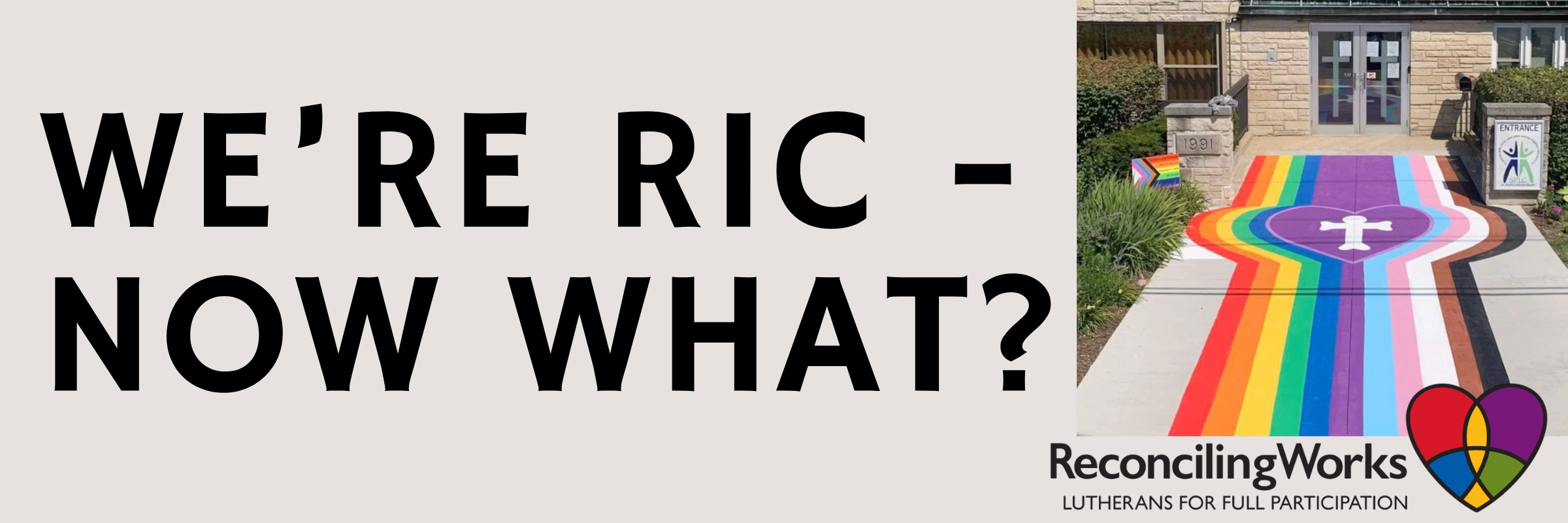
Living Our Welcome + Setting New Milestones + Moving Faith into Action
Practical Ideas to Set New Reconciling in Christ (RIC) Milestones
This resource was created to support and encourage Reconciling in Christ (RIC) faith communities as they continue to live out their welcome, inclusion, and celebration of people of all sexual orientations, gender identities, and gender expressions, while deepening their commitment to racial equity and anti-racism.
The action steps shared in this resource are invitations—ideas and possibilities to help your community imagine what might come next. We hope they spark conversation, inspire creativity, and offer practical ways to continue growing in your ministry of welcome, inclusion, celebration, and advocacy.
These ideas come from the varied experiences of RIC faith communities of all types, including congregations, synods, nonprofit organizations, independent ministries, campus ministries, youth organizations, and outdoor ministries. They reflect the ongoing learning and faithful work of communities across the Evangelical Lutheran Church in America (ELCA), the Evangelical Lutheran Church in Canada (ELCIC), and other faith communities connected with ReconcilingWorks and the Reconciling in Christ program.
Becoming an RIC partner is an important milestone—but it is not the end of the journey. It is an invitation to continue asking: How can we more fully live into the commitments we have made? Where are we being called to learn, grow, advocate, and act? There is no single answer to those questions. Every community has its own context, gifts, challenges, and opportunities. ReconcilingWorks encourages you to celebrate what you are already doing, explore the ideas in this resource with curiosity, and identify meaningful next steps for your community.
ReconcilingWorks is here to accompany you along the way. Whether you are looking for ideas, navigating a challenge, or imagining what comes next, we are grateful to be in this work with you. If you would like to connect with staff, you can do so here.
Milestone: Worship
Worship is one of the most meaningful ways a Reconciling in Christ (RIC) faith community can live out its public commitments to LGBTQIA+ inclusion and racial equity. Through prayer, preaching, music, storytelling, and leadership, faith communities can create spaces where all people are welcomed, affirmed, celebrated, and invited to share their gifts.
The following five areas offer practical opportunities to deepen and expand your faith community's RIC commitment. These are invitations for continued growth, not additional RIC requirements.
Create opportunities for LGBTQIA+ people, Black, Indigenous, and People of Color (BIPOC), and their families to share how faith, identity, and belonging intersect.
Ways to live this out:
Invite LGBTQIA+ members, BIPOC members, and allies to share a brief personal reflection during worship about their faith journey and why RIC matters to them.
Incorporate stories and experiences of LGBTQIA+ and BIPOC people into sermons, prayers, and faith communities' newsletters.
Highlight the faith journeys of parents, caregivers, and families who have grown in their understanding and affirmation of LGBTQIA+ loved ones.
Create opportunities for storytelling during RIC Sunday, Pride worship, and other meaningful celebrations.
Remember: Sharing personal stories should always be voluntary, with clear permission and respect for privacy and confidentiality.
Ensure that everyone who enters worship experiences a genuine sense of belonging, regardless of sexual orientation, gender identity, gender expression, or racial identity.
Ways to live this out:
Provide training for greeters, ushers, worship hosts, and other volunteers on inclusive hospitality, cultural awareness, and respectful language.
Use inclusive language in prayers, sermons, hymns, and worship materials that reflects the diversity of God's people.
Make your faith community’s RIC welcome statement visible in worship bulletins, on screens, and through spoken invitations.
Offer opportunities for people to share their pronouns without requiring anyone to do so.
Make space for LGBTQIA+ and BIPOC people to share their gifts, perspectives, and leadership throughout the worship life of the faith community.
Ways to live this out:
Intentionally invite LGBTQIA+ and BIPOC members to serve as readers, musicians, prayer leaders, communion assistants, and worship planners.
Invite openly LGBTQIA+ and BIPOC rostered ministers to serve as guest preachers and/or worship leaders.
Include diverse theological perspectives, music, prayers, and liturgical resources that reflect the breadth of God's creation.
Encourage worship planning teams to regularly reflect on whose voices and experiences are represented and whose may be missing.
Celebrate the faith community's ongoing commitment to welcome, inclusion, celebration, and advocacy through meaningful worship experiences. Find worship resources on the ReconcilingWorks Worship, Liturgy, & Scripture webpage.
Ways to live this out:
Celebrate RIC Sunday on the last Sunday of January and Pride Worship during June, using worship resources from ReconcilingWorks. Adapt the dates to fit your faith community's calendar.
Recognize the anniversary of your faith community’s RIC welcome statement with prayers, reflections, or a reaffirmation of your public commitments.
Celebrate important milestones in your faith community’s ongoing work toward LGBTQIA+ inclusion and racial equity.
Consider a special offering during RIC Sunday or Pride worship to support ReconcilingWorks as part of your faith community's annual meaningful contribution.
Use the power of worship, prayer, and sacred ritual to affirm the dignity and belovedness of every person. Find worship resources on the ReconcilingWorks Worship, Liturgy, & Scripture webpage.
Ways to live this out:
Offer a name-affirming blessing or renaming ceremony for transgender members who wish to celebrate their affirmed name within the worshiping community.
Include prayers that recognize the joys, challenges, resilience, and contributions of LGBTQIA+ and BIPOC communities.
Create opportunities in worship to acknowledge experiences of exclusion and injustice while proclaiming God's love, healing, and hope.
Incorporate blessings and liturgies that celebrate the diversity of families, relationships, and identities within your faith community
Recognize Pride Month, Transgender Day of Remembrance, National Coming Out Day, and other meaningful observances. Find dates for meaningful observances on the ReconcilingWorks News & Events page.
Any public recognition of someone's identity or personal journey should be shaped by that person's wishes and consent.
Milestone: Physical Spaces and Social Engagement
Your faith community’s physical spaces – building(s) and grounds – communicate a message long before someone enters worship. From outdoor signs and entryways to gathering spaces and community partnerships, your faith community has opportunities to demonstrate its commitment to LGBTQIA+ inclusion and racial equity.
The following five areas offer practical ways to deepen and expand your faith community’s Reconciling in Christ (RIC) commitment through visible welcome, intentional hospitality, accessibility, and community engagement. These are invitations for continued growth, not additional RIC requirements.
Ensure that everyone who approaches or enters your building can clearly recognize your faith community's commitment to LGBTQIA+ inclusion and racial equity.
Ways to live this out:
Display your RIC certificate in a prominent location, such as the narthex, welcome center, or main entrance.
Post your faith community's complete RIC welcome statement alongside your certificate or in another highly visible location.
Display the RIC Rainbow Heart logo, Progress Pride flag, or another recognizable symbol of LGBTQIA+ inclusion on outdoor signs, street-facing windows, or entryways. Purchase customizable banners at the ReconcilingWorks Zazzle store.
Include your RIC identity and welcome statement on digital signs and other public-facing materials. For access to high-quality RIC logos email a request to info@reconcilingworks.org.
Consider how your building's artwork, photographs, decorations, and shared spaces communicate who belongs in your faith community.
Ways to live this out:
Walk through your building from the perspective of a first-time visitor. Consider whether LGBTQIA+ individuals, BIPOC people, and diverse families will see themselves reflected in your space.
Display artwork, photographs, and images that celebrate a diversity of racial identities, family structures, gender expressions, and lived experiences.
Review bulletin boards, information displays, and gathering spaces to ensure they reflect your faith community’s commitment to inclusion and racial equity.
Use ReconcilingWorks' Exploring Our Welcome resource to guide a faith community conversation about the messages your physical spaces communicate.
Create spaces where people of all gender identities, gender expressions, ages, and abilities can participate comfortably, safely, and with dignity.
Ways to live this out:
Provide accessible, all-gender restroom options, including single-stall restrooms where possible, throughout your building.
Review restroom signage to ensure it is clear, respectful, and welcoming to people of all gender identities.
Evaluate entrances, gathering spaces, seating, and restrooms for physical accessibility, considering the needs of people with disabilities and mobility challenges.
Invite LGBTQIA+ members, BIPOC members, and people with disabilities to share feedback about how your building could become more welcoming and accessible.
Extend your RIC commitment beyond your faith community’s uses by creating opportunities for community connection, support, and shared use of your space.
Ways to live this out:
Invite local PFLAG chapters, LGBTQIA+ support groups, and community organizations to hold meetings, educational events, and gatherings in your building.
Build relationships with BIPOC-led organizations and explore opportunities to share space for community events, conversations, and celebrations.
Offer meeting or gathering space for organizations supporting LGBTQIA+ youth, families, and historically marginalized communities.
Develop clear building-use policies that affirm your faith community's commitment to LGBTQIA+ inclusion, racial equity, and equitable access.
Use your building and gathering spaces to help members and visitors deepen their learning, build relationships, and participate in the ongoing work of inclusion and justice.
Ways to live this out:
Make ReconcilingWorks brochures, educational materials, and other LGBTQIA+ and racial equity resources available in your welcome center, information racks, and gathering spaces.
Create a community resource board highlighting local LGBTQIA+ organizations, BIPOC-led initiatives, support groups, and opportunities for education and advocacy.
Host educational conversations, film screenings, book discussions, or community gatherings focused on LGBTQIA+ inclusion and anti-racism
Partner with local organizations to participate in Pride celebrations, racial justice initiatives, and other community events that reflect your faith community's public commitments.
Milestone: From Welcome to Belonging
Becoming a Reconciling in Christ (RIC) faith community is an important public commitment. Living into that commitment is an ongoing journey of building relationships, deepening understanding, removing barriers, and creating a faith community where LGBTQIA+ people, Black, Indigenous, and People of Color (BIPOC), and their families experience genuine belonging.
The following five areas offer practical opportunities to move from welcoming people into your faith community to ensure they are fully included, celebrated, and empowered to share their gifts. These are invitations for continued growth, not additional RIC requirements.
Move beyond simply welcoming people into your faith community by intentionally creating opportunities for meaningful relationships, shared experiences, and authentic community.
Ways to live this out:
Encourage intentional one-on-one conversations between faith community members, particularly across generational, ideological, racial, and social differences, to build trust and understanding.
Invite LGBTQIA+ members, BIPOC members, and allies to share brief reflections during worship or in faith community newsletters about their faith journeys and why RIC matters to them.
Highlight stories from parents, caregivers, and families about their experiences of learning, growing, and supporting LGBTQIA+ and BIPOC loved ones.
Invite small groups, ministry teams, and fellowship groups to reflect on how they create belonging and identify barriers that may prevent others from fully participating.
Create opportunities for members and leaders to grow in their understanding of LGBTQIA+ identities, racial equity, and the ways faith communities can become more inclusive.
Ways to live this out:
Host educational workshops, film discussions, or panels featuring LGBTQIA+ and BIPOC speakers, theologians, pastors, and community leaders.
Facilitate conversations about gendered language in Scripture, prayers, hymns, and liturgies. Explore inclusive alternatives to phrases such as such as “siblings” rather than "brothers and sisters," people of God” rather than "men and women," and “God” or “Creator” rather than exclusively masculine references to God.
Language for God - ELCA FAITH FORMATION
Inclusive Language Guidelines 2018_- ELCIC
Total Inclusion - ELCA
Offer educational forums about local, state, and federal policies affecting LGBTQIA+ people and BIPOC communities, exploring how faith calls us to care for our neighbors.
Find current policies on the Movement Advancement Project website.
Ensure your faith community’s commitment to LGBTQIA+ inclusion and racial equity is clearly communicated, consistently practiced, and understood by members, visitors, staff, and leaders.
Ways to live this out:
Identify your faith community as "A Reconciling in Christ faith community" on your website, newsletters, bulletins, letterhead, and other communications. For access to high-quality RIC logos email a request to info@reconcilingworks.org.
Include your RIC welcome statement, or a shortened version with a link to the full statement, in communications. Explain what RIC means and the faith community’s four public commitments.
Incorporate your faith community's RIC journey into new member classes, sharing the story behind adopting your welcome statement and how those commitments continue to shape your ministry.
Engage staff, council members, ministry leaders, and volunteers in regular conversations about inclusive language, welcoming practices, and how to respond when someone experiences exclusion.
Create a faith community culture where LGBTQIA+ people, BIPOC individuals, couples, and families experience the same care, recognition, and opportunities for participation as everyone else.
Ways to live this out:
Recognize and celebrate the anniversaries, marriages, relationships, and family milestones of all couples equally, with their permission.
Ensure faith community directories, mailings, and communications accurately reflect people's names, pronouns, relationships, and family structures. For example, be sure to list any family with more than one last name under each last name, include correct last names on mailing labels, etc.
Welcome children of LGBTQIA+ parents into baptism and faith community life with the same joy, care, and pastoral support extended to all families.
Celebrate marriages and offer appropriate blessings for couples who choose not to marry legally or cannot do so, consistent with your faith community's commitments and applicable church policies.
Move from inviting people into existing structures to creating a faith community where LGBTQIA+ and BIPOC people can shape the ministry, leadership, and future.
Ways to live this out:
Invite LGBTQIA+ and BIPOC members into meaningful leadership opportunities on council, ministry teams, worship planning groups, and other decision-making bodies.
Encourage every faith community group, from youth ministry to adult education and fellowship groups, to identify ways they can actively live out the faith community's RIC commitments.
During pastoral transitions, engage in intentional conversations about the faith community's readiness to welcome, support, and celebrate the gifts of openly LGBTQIA+ and BIPOC rostered leaders.
Regularly invite feedback from members and visitors about their experiences of belonging, and use what is learned to address barriers, strengthen relationships, and guide future ministry.
Milestone: From Welcome to Advocacy
Advocacy begins with relationships, grows through understanding, and becomes visible through meaningful action. Whether participating in Pride celebrations, supporting community organizations, or speaking out against injustice, faith communities have opportunities to put their faith into action.
The following five areas offer practical ways to deepen and expand your faith community's RIC commitment through community engagement, public witness, and advocacy. These are invitations for continued growth, not additional RIC requirements.
Develop authentic, ongoing relationships with LGBTQIA+ and BIPOC individuals, families, organizations, and community leaders to better understand their experiences, needs, and hopes.
Ways to live this out:
Encourage intentional one-on-one conversations with LGBTQIA+ people, BIPOC neighbors, and community leaders to listen, learn, and build relationships rooted in mutual respect.
Create a faith community team focused on developing relationships with local LGBTQIA+ and BIPOC communities, including youth, families, older adults, and other historically marginalized populations.
Connect with local PFLAG chapters, LGBTQIA+ community centers, and racial justice organizations to explore opportunities for partnership and mutual support.
Invite LGBTQIA+ and BIPOC community leaders to share their experiences and perspectives with your faith community, allowing their insights to help shape future ministry and advocacy.
Ensure that people beyond your faith community know it is a place of welcome, affirmation, and support for LGBTQIA+ people and a community committed to racial equity.
Ways to live this out:
Make your RIC identity and welcome statement easy to find on your faith community’s website, including the RIC Rainbow Heart logo and a link to ReconcilingWorks. For access to high-quality RIC logos email a request to info@reconcilingworks.org.
Highlight your faith community’s RIC commitment in social media posts, community advertisements, local publications, and neighborhood communications.
Share your faith community's story of becoming RIC and the ways you continue to live out your commitments through letters to the editor, community newsletters, and local media.
Connect with LGBTQIA+ and BIPOC community centers and organizations so they know your faith community is available for affirming worship, pastoral care, and community support.
Move beyond inviting people into your faith community by showing up in the places where LGBTQIA+ and BIPOC communities gather, celebrate, organize, and build relationships.
Ways to live this out:
Participate in local Pride celebrations by marching in parades, hosting an information table, distributing water, or partnering with other RIC faith communities for a shared presence.
Support LGBTQIA+ and BIPOC cultural events, performances, festivals, and community celebrations through sponsorship, attendance, or volunteer participation.
Collaborate with other affirming faith communities to host public worship services or community gatherings for RIC Sunday, Pride Month, National Coming Out Day, and Transgender Day of Remembrance. Find dates for meaningful observances on the ReconcilingWorks News & Events page.
Encourage clergy and lay leaders to participate visibly in community events, demonstrating that people of faith stand alongside LGBTQIA+ and BIPOC neighbors.
Respond to injustice with compassion, courage, and action, recognizing that the call to love our neighbors includes advocating for their dignity, safety, and well-being.
Ways to live this out:
Observe Transgender Day of Remembrance (November 20) through prayer, education, or a community vigil honoring transgender people whose lives have been lost to anti-transgender violence.
Offer educational forums about local, state, and federal policies affecting LGBTQIA+ people and BIPOC communities, exploring their impact through the lens of faith, justice, and human dignity.
Participate in peaceful rallies, vigils, and community events that advocate for the safety, dignity, and equal treatment of LGBTQIA+ people and communities experiencing racial injustice.
Encourage faith community members to engage in civic life through voter education, contacting elected officials, and learning about policies affecting historically marginalized communities, consistent with applicable church guidance. See the ELCA Witness in Society webpage for tools and resources.
Recognize that advocacy is most effective when faith communities work together, share resources, and build sustained relationships that extend beyond individual events.
Ways to live this out:
Partner with neighboring RIC faith communities and other affirming faith communities to coordinate Pride participation, educational opportunities, public worship, and community advocacy.
Work with your synod to support or establish LGBTQIA+ inclusion and racial justice teams that provide resources, education, and opportunities for collaboration.
Invite pastors and lay leaders to speak with local LGBTQIA+ and BIPOC organizations, community groups, and civic organizations about your faith community’s commitment to welcome and advocacy.
Identify one or two ongoing community partnerships that your faith community can support through volunteering, financial contributions, shared space, or participation in community initiatives.
This resource is available for purchase as a downloadable PDF.
It will also be available for sale as a physical booklet in 2027.